
How to Choose the Right Insulation Company in Whitney
Choosing an insulation company in Whitney comes down to three checks: what materials the contractor can actually install, whether they inspect your attic before recommending anything, and whether their Nevada license and manufacturer credentials hold up when you look them up. A contractor who stocks one brand of blown fiberglass will quote you blown fiberglass. One who mostly installs spray foam will find reasons your attic needs spray foam. The inventory usually predicts the recommendation, which is why the first question isn’t “what do you charge?” but “what materials do you carry?” If you’d rather skip the homework and talk it through with a specialist, call (844) 320-7586.
Why does a single-trade insulation specialist beat a general contractor?
A general contractor doing insulation between roofing and remodeling jobs works with whatever material sits in the supply chain that month. An insulation-only company works with the same material every day, which is where the difference in diagnosis shows up. In our experience, the depth comes from repetition: you learn how Knauf fiberglass behaves in a tight knee-wall, how CertainTeed batts hold up in a vented attic, and when Rockwool earns its price for fire resistance and sound control. None of that knowledge transfers easily to someone whose last job was a bathroom tile.
Single-trade focus also changes what happens on site. When every job is an insulation job, the crew’s training stays in one lane instead of being spread across unrelated trades. Our technicians have up to 9 years of experience, all of it spent on insulation. That matters in Whitney because the housing stock varies – newer builds with engineered trusses and older homes with shallow or irregular framing both need a diagnosis, not a stock answer.
What to ask:
- Do you install insulation only, or is it one service among several?
- Which installation methods do you handle – batt, blown-in, spray foam, or just one?
- Can you name the manufacturer brands you’re authorized to install?
How should a good insulation company diagnose your attic?
A company that recommends a material before inspecting your attic is guessing, not specifying. The inspection is where the correct product gets chosen: how deep the framing allows, whether the space is vented or conditioned, where air sealing is needed first, and how difficult the access is. If a contractor quotes over the phone without looking, treat the number as a placeholder at best.
A proper attic assessment in Whitney should look at insulation depth and type, air leaks around penetrations and top plates, venting, moisture signs, and how the roofline is shaped. Complex rooflines and low-clearance attics are where a one-brand contractor runs out of options and a multi-material company doesn’t. For a closer look at how the diagnosis translates into attic insulation work, the process is the same: inspect first, spec second, price third.
Red flags during the visit:
- A material recommendation made before anyone goes in the attic.
- No talk of air sealing, only adding more insulation on top.
- A quote with no square footage, material name, or stated depth.
- Pressure to decide on the spot.
What does multi-brand access actually mean in practice?
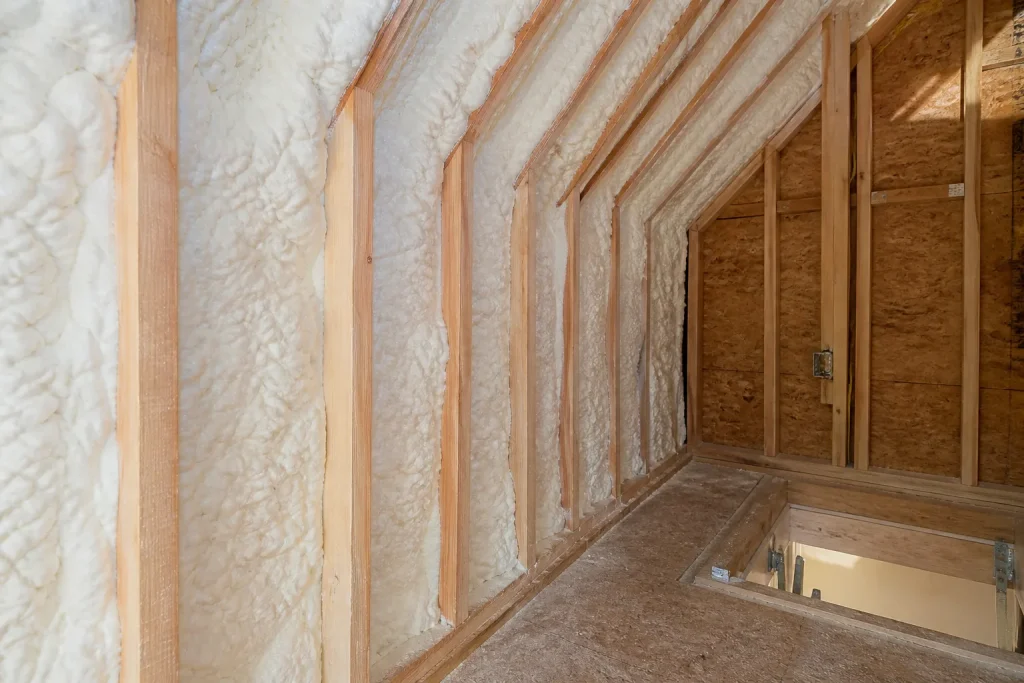
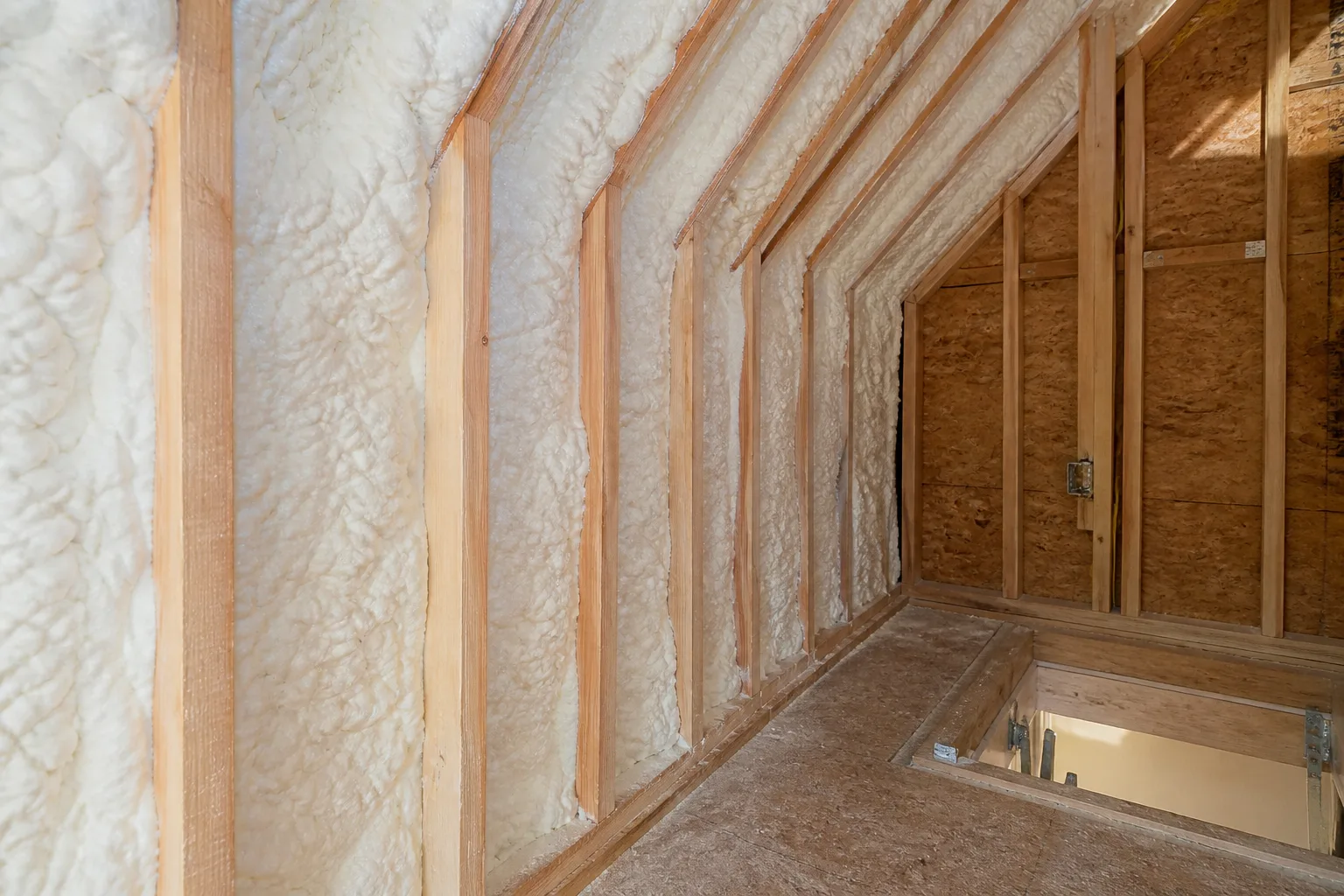
Multi-brand access means the company can match the material to the space instead of fitting the space to the material. A deep vented attic often suits blown-in cellulose. A conditioned attic with HVAC equipment inside the envelope usually calls for closed-cell foam. A tricky roof assembly with mixed zones might need a hybrid approach. A contractor carrying one product line can only sell you that line, which is a bias they may not even recognize.
At Attic Insulation Whitney, that means blown-in, batt, and spray foam insulation are all on the table, drawn from eight manufacturer brands spanning fiberglass, mineral wool, cellulose, and open- and closed-cell foam. Icynene and Demelec cover the foam side. A homeowner with sustainability priorities can go with GreenFiber cellulose; one who wants fire resistance alongside thermal performance can choose Rockwool. Three methods, eight brands, one specialty – and no reason to steer you toward the wrong one.
How do you verify a Nevada insulation contractor?
Check the license first. The Nevada State Contractors Board maintains a public lookup where you can confirm that a contractor holds an active license, see the license classification, and check for complaints or disciplinary actions. What the lookup won’t tell you is whether the crew is actually trained on the material going into your attic – that’s a separate check.
Manufacturer installation certification matters because it’s product-specific. Authorized installers get training from the brand on proper application and, in some cases, support if the product fails. Ask which brands the company is authorized to install and whether they can show it. Then ask about warranty in two parts: the manufacturer’s warranty on the material and the installer’s own workmanship warranty. Get both in writing, and note who honors each one.
Verification checklist:
- Look up the license and confirm it’s active.
- Confirm which manufacturer brands the company is authorized to install.
- Get material and workmanship warranty terms in writing.
- Confirm the company carries liability insurance and, where required, workers’ comp.
How do you compare competing quotes that propose different materials?
Normalize the quotes before you compare them. Use cost per installed R-value per square foot: cost per installed R-value per square foot. Divide the total installed price by the R-value achieved, then by square footage covered. That gives you a number you can hold side by side even when one contractor proposes cellulose and another proposes foam. Cheapest per square foot isn’t the same as cheapest per unit of thermal performance, and this calculation exposes that gap.
Insulation can help lower heating and cooling costs, but results depend on the attic and the home, so ignore any quote with a savings percentage baked in. Also check scope: is air sealing included, are baffles and vent chutes part of the price, and does the quote state the final depth or R-value being installed? Finally, ask whether anyone checked the requirement with the city’s building department – it varies by home and jurisdiction, so it should be confirmed during the estimate.
A quote that’s genuinely comparable states material, brand, depth, R-value, square footage, air sealing, and warranty on one page. If any of those are missing, it’s not a quote you can compare.
When should you call a pro instead of doing it yourself?
Roughly the point where you’d be crawling into a low attic with loose fill and a hose. Blown-in and spray foam both involve equipment and material handling that aren’t practical for a homeowner, and spray foam in particular requires proper application to perform and cure correctly. Batt can be a DIY project in an open, easily accessed attic, but the moment you’re dealing with air sealing, venting, or a tight knee-wall, a trained installer is the better call.
Call a professional if you see compression or gaps in existing insulation, if your attic has moisture or venting questions, or if you simply aren’t sure what’s up there. Wrong assumptions cost more to undo than a proper install costs to do right the first time.
Related services in Whitney
We install attic insulation, blown-in insulation, and spray foam across Whitney, and we can schedule a free estimate around what your attic actually needs. Call (844) 320-7586. We answer 24/7. Fast dispatch from 7am to 7pm, Sunday through Friday.
What happens when you call
- 1
A real person answersNo phone trees – you reach a local pro.
- 2
You get an upfront price rangeHonest numbers before anyone is dispatched.
- 3
A background-checked tech heads outLicensed & insured, dispatched right away.
- 4
You approve before work beginsNothing starts until you say go.
The Bottom Line
Pick the company by material access and diagnostic process, not by price alone. Ask what they carry, wait to hear a recommendation until after they’ve been in the attic, verify the Nevada license and the manufacturer authorizations, and normalize quotes by cost per R-value per square foot. That sequence catches the generalist doing insulation on the side, the one-brand contractor selling what’s in stock, and the quote that isn’t actually a quote. If you’re in Whitney and want help narrowing it down, Attic Insulation Whitney offers free estimates – call (844) 320-7586.
Frequently Asked Questions
Cost depends on the square footage, existing insulation, air sealing, and the material chosen – blown-in, batt, and spray foam sit at different price points. We set the price per job after the free estimate and the written quote, not over the phone. Call (844) 320-7586 to schedule your free estimate.
Yes. The attic assessment and the written estimate are free, and you get a written price before any work is booked. Our technicians have up to 9 years of experience, all focused on insulation. Call (844) 320-7586 for an exact quote – estimates are free.
Most residential attic insulation work is completed in a single day once the material and method are set. Complex rooflines or significant air sealing can extend that. The written estimate states the expected timeline before you commit. Call (844) 320-7586 to schedule your free estimate.
It depends on the home and the scope, so we check the requirement with the city’s building department during the estimate. The final R-value and material specification should be confirmed before work begins. Call (844) 320-7586 to schedule your free estimate.
Written by the team at Attic Insulation Whitney.
Need Insulation Help?
Call Attic Insulation Whitney - licensed & insured, here with fast help in Whitney.
(844) 320-7586